
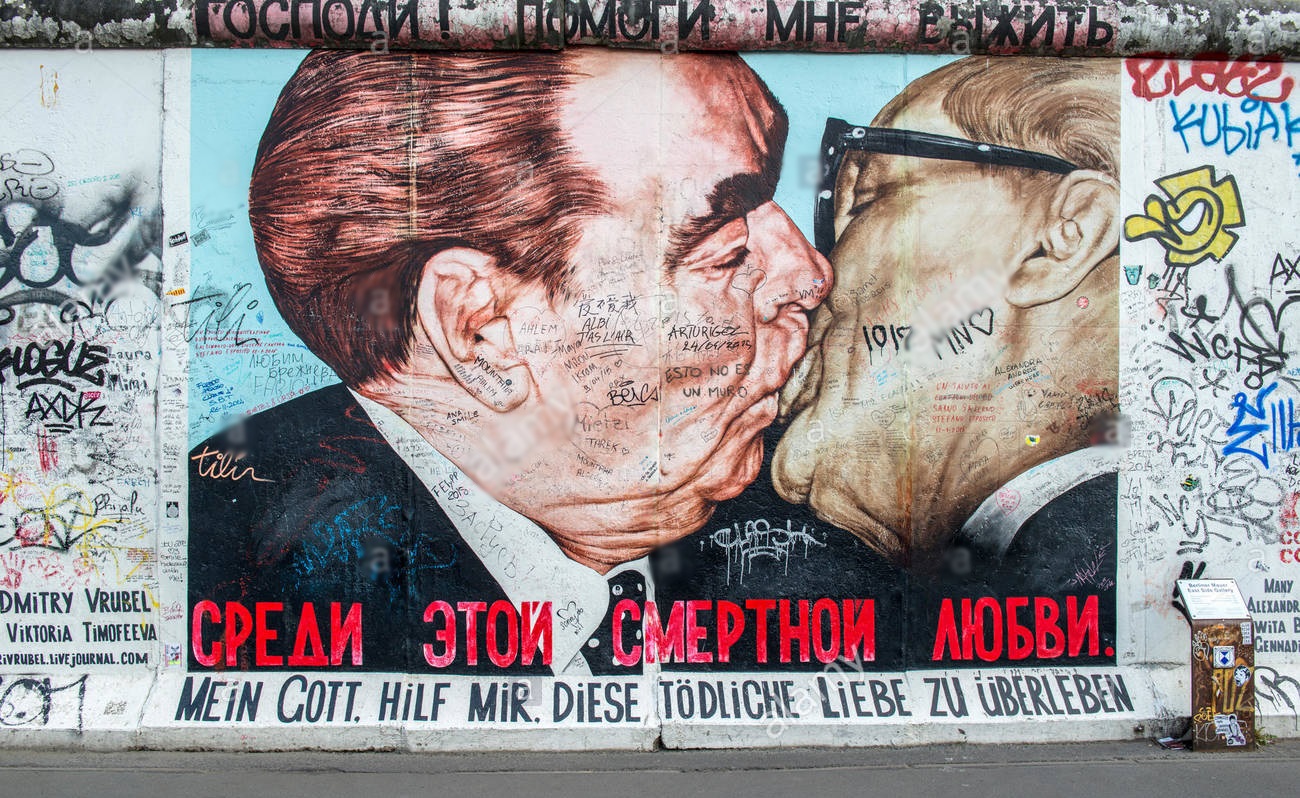
(Russian: «Господи! Помоги мне выжить среди этой смертной любви»
German: Mein Gott, hilf mir, diese tödliche Liebe zu überleben),
Tanrım, bu ölümcül aşkın mücadelesinde bana yardım et!
“Kardeşlik Öpücüğü” olarak adlandırılan Dmitri Vrubel tarafından yapılmış Berlin Duvarındaki grafit en bilindik eserlerdendir. 1990’da çizilen bu resim, 1979’da Alman Demokratik Cumhuriyeti’nin kuruluşunun 30. yıldönümü kutlamaları sırasında Leonid Brejnev ve Erich Honecker’ı kardeşçe kucakladığı ve öpüştüğü anı yakalayan bir fotoğraftan ileri gelmektedir.
Oldukça ünlü olan bu fotoğraf, 7 Ekim 1979’da Doğu Berlin’de Régis Bossu tarafından çekildi. O dönem geniş çapta ses getirdi. Brezhnev o dönem komünist bir ulus olan Doğu Almanya’yı, kuruluşunun yıl dönümü kutlamak için ziyaret etmiştir. 5 Ekim’de Doğu Almanya ve Sovyetler Birliği on yıllık bir karşılıklı destek anlaşması imzalamıştır, buna göre Doğu Almanya’nın Sovyetler Birliği’ne gemi, makine ve kimyasal gibi ekipman sağlaması ve Sovyetler’in ise Doğu Almanya’ya yakıt ve nükleer ekipman sağlayacağına dair bir uzlaşıya varıldı. Berlin Duvarı’nın yıkılması ile birlikte Doğu Avrupa’daki komünizmin sona erişi, sosyalist kardeşlik öpüşmesini de sonlandırdı.

Sosyalist kardeşlik kucaklaması, yanaklardan üç öpücük şeklinde oluşan bir dizi şekil ile birlikte yapılmasının yanısıra nadiren de olsa, iki lider kendilerini son derece yakın bulduklarında, öpücükler yanaklardan ziyade ağızdan yapılır.
Bu kucaklama, öpüşmeksizin, vücudun sol ve sağ tarafları arasında değişen üç sıkı sarılma serisinden oluşur. Bu farklı selamlama şekli, tebrik olarak yanaktan öpüşme geleneğini adet edinmemiş Asya’daki Komünist liderler tarafından aslında benimsenmiştir. Soğuk Savaş döneminde, Asya’daki komünist liderler Avrupalılar ve Kübalılardan öpüşmek için rızasını alsalar da bu durum pek uygulanmış olamadı.
SSCB’nin ünlü lideri Leonid Brejnev ile Doğu Alman lideri Eric Honecker’in başını çektikleri ‘komünist liderler arasında dudaktan öpüşme’ şekli “Öpüşme Kararnamesi” nde geçen sembol ve anlamları ise şu şekildedir.
Madde 19 - Yanaktan öpücük: Üst, ast ile karşılaştığı zaman, onu takdir etmek istiyorsa, yanağından öper. Ast, böylece kendisinden şikayetçi olunmadığını da anlamış olur.

Madde 20 - İki yanaktan öpme: Üst, asta moral vermek ve kendisini teşvik etmek istemektedir.

Madde 21 - Dudaktan bir öpücük: Görevlinin pek yakında terfi edeceği anlamına gelir.

Madde 22 - Dudaktan iki öpücük: Sadık astlar bu şekilde öpülür; sadakatin devamının ve daha da artmasının beklendiği mesajı verilir.

Madde 23 - Dudaktan üç öpücük: İki üst düzey görevli, karşılaştığı zaman bu şekilde öpüşür. Ama öpme hamlesini, kıdemli olan yapar.

Madde 24 - Dudaktan üç öpücük ve sırtın sıvazlanması: İki görevli eşit pozisyonlardaysa, bu madde hükümleri uygulanır.
Kararnamede, yetkililerin birbirlerine hastalık bulaştırmaması için alınan önlemler de yer alıyor. Bu konuları düzenleyen komisyonda, zührevi hastalıklar uzmanları da görev yapıyor.

My God, Help Me to Survive This Deadly Love
(Russian: «Господи! Помоги мне выжить среди этой смертной любви»
German: Mein Gott, hilf mir, diese tödliche Liebe zu überleben),
Sometimes referred to as the Fraternal Kiss (German: Bruderkuss), is a graffiti painting on the Berlin wall by Dmitri Vrubel, one of the best known of theBerlin wall graffiti paintings Created in 1990, the painting depicts Leonid Brezhnev and Erich Honecker in a fraternal embrace, reproducing a photograph that captured the moment in 1979 during the 30th anniversary celebration of the foundation of the German Democratic Republic.
The well-known photograph capturing the famed embrace was taken by Régis Bossu in East Berlin on October 7, 1979. It was widely republished. Brezhnev was visiting East Germany at the time to celebrate the anniversary of its founding as a Communist nation. On October 5, East Germany and the Soviet Union had signed a ten-year agreement of mutual support under which East Germany would provide ships, machinery and chemical equipment to the Soviet Union and the Soviet Union would provide fuel and nuclear equipment to East Germany.

The socialist fraternal kiss consisted of an embrace, combined with a series of three kisses on alternate cheeks. In rare cases, when the two leaders considered themselves exceptionally close, the kisses were given on the mouth rather than on the cheeks.
The socialist fraternal embrace consists of a series of three deep hugs, alternating between the left and right sides of the body, without kissing. This modified greeting was adopted by Communist leaders in Asia, which lacks a tradition of cheek kissing as greeting. During the Cold War, Communist leaders in Asia consented to receive kisses from Europeans and Cubans, but they themselves omitted the kiss. Since the end of Communism in eastern Europe, the socialist fraternal kiss has died out.
The socialist fraternal kiss or socialist fraternal embrace is a special form of greeting between the statesmen of Communist countries. This act demonstrates the special connection that exists between Socialist states.
Leonid Brejnev, leader of the USSR, and East German leader Erich Honecker, the leader of the “Kissing on the Dawn between Communist Leaders”, “Fraternal Kiss”, are the following symbols and meanings as below.
Article 19 - Kissing from the cheek: When you meet the upper, the lower, if you want to appreciate it, kiss from the cheek. Subordinates, so you will also understand that you are not complaining about himself.

Article 20 - Two side kisses: The top wants to give a boost and encourage for subordinates.

Article 21 - A kiss from the lip: It means that your mission will be promoted very soon.

Article 22 - Two kisses from the lip: Loyal subordinates are kissed this way; it is given the message that the continuation of faithfulness and further increase is expected.

Article 23 - Three kisses from the lip: Two senior officers kiss in this way when they meet. But kissing made by senior.

Article 24 - Three kisses and rubbing of the back: If the two officials are in equal positions, the provisions of this article shall apply.
The verdict also includes measures taken to prevent authorities from infecting any illness each other. In the committee organizing these issues, specialists of venereal diseases are also working.

 Esra SELVAN
Yorum bırakın